

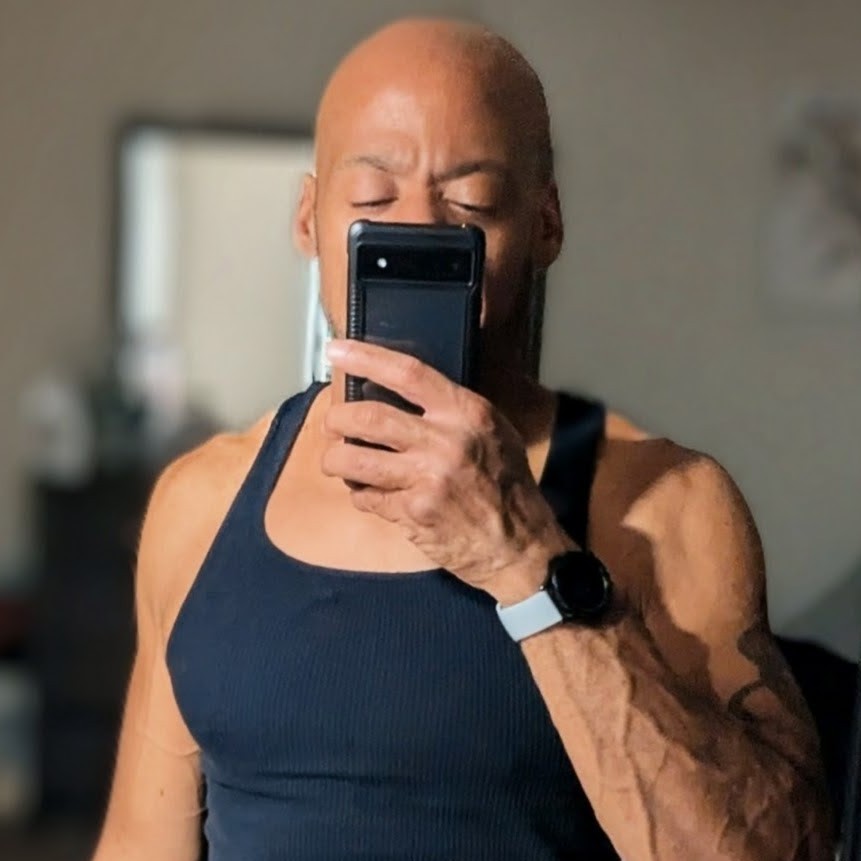
In my fitness journey, I was the tortoise. Slow, steady, consistent. I admit, my pace is up there now, but it didn’t start that way. This is three years of showing up, every day, since age 42. The speed came later.
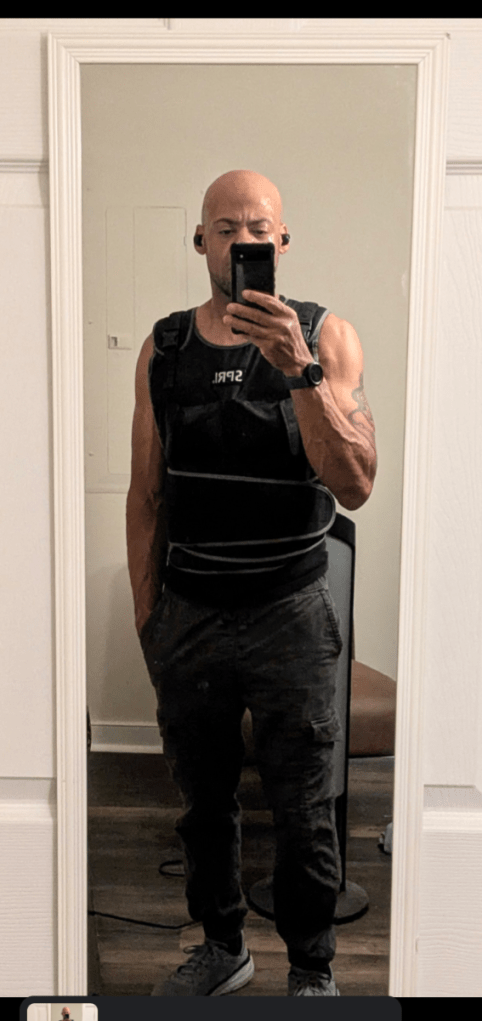
At the beginning, it was just me and walking, taking those steps one by one, building a base. Now, three years later, the difference is that I do something every single day. This routine is the thing that keeps me going. If I do nothing else, I’m at least going to walk. These days, that walk is with a weighted vest. The goal remains the same: get those steps in and show up.
Setting My Calorie Count: A Key Starting Point
When I first set out, I knew I needed structure. Starting at around 230 pounds, I wanted to eat at the calorie level of my goal body size and weight. I didn’t want to restrict myself too much. I also didn’t want to overcomplicate things. So, I kept it simple with a clear calorie target. To determine this number, I used the Calculator.net calorie calculator. I entered my age, height, and goal weight as current details: 42 years old, 5’8″ tall, and 157 pounds. I also included my activity level. This involves daily exercise or intense exercise 3-4 times a week.
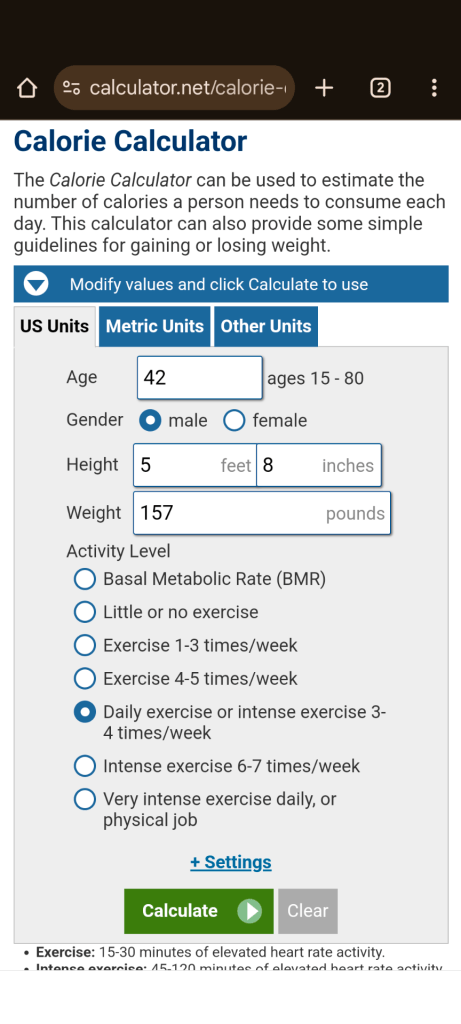
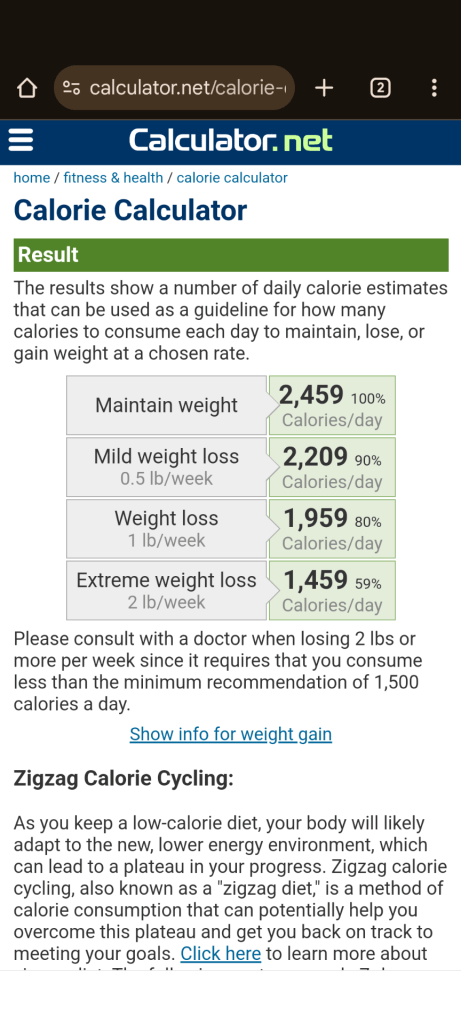
Based on these inputs, the calculator recommended 2,459 calories to maintain weight. This aligned with my goal of reaching and sustaining a healthy weight. This rounded figure gave me room to enjoy meals without stressing over every calorie, making it sustainable.
Early on, sticking to that calorie limit felt like a small victory each day. I rarely exceed it, and it became a core part of my journey. Tracking calories and activity isn’t something I dread; it’s like brushing my teeth or washing my hands—just something I do. This daily practice kept me consistent, and over time, that consistency is what got me here and keeps me going.
Daily Tracking for Accountability: The Power of Visual Progress
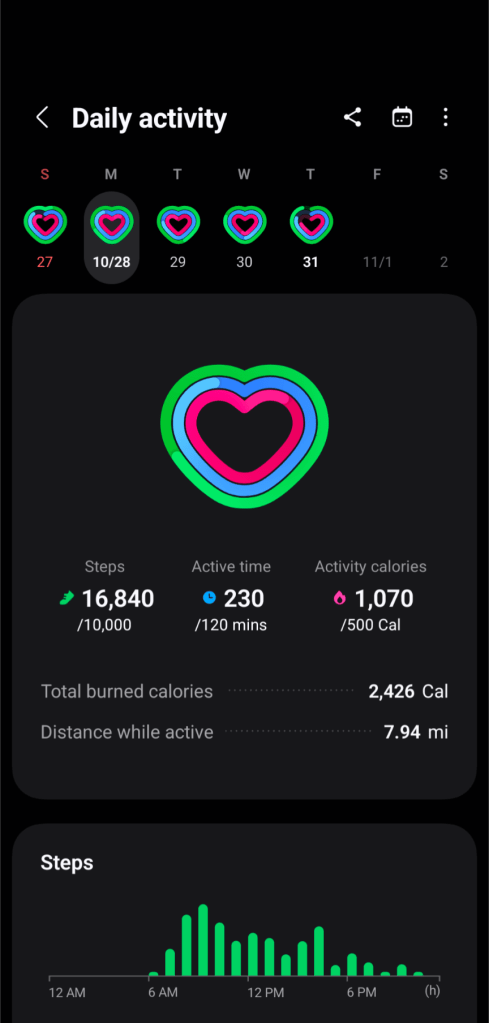
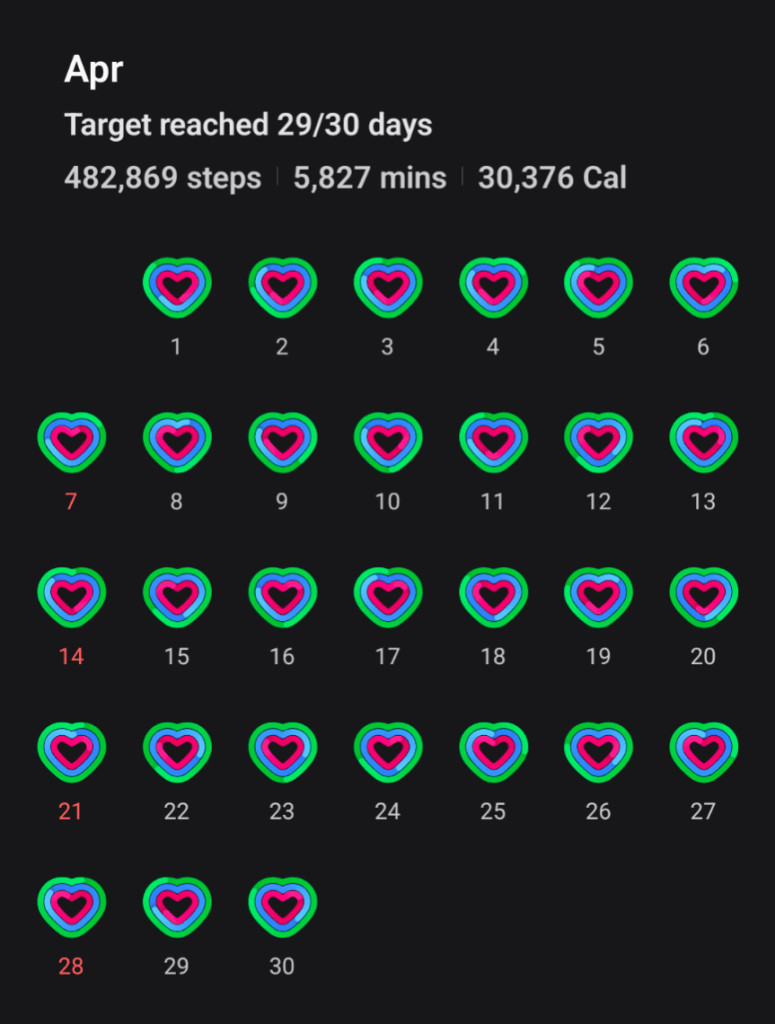
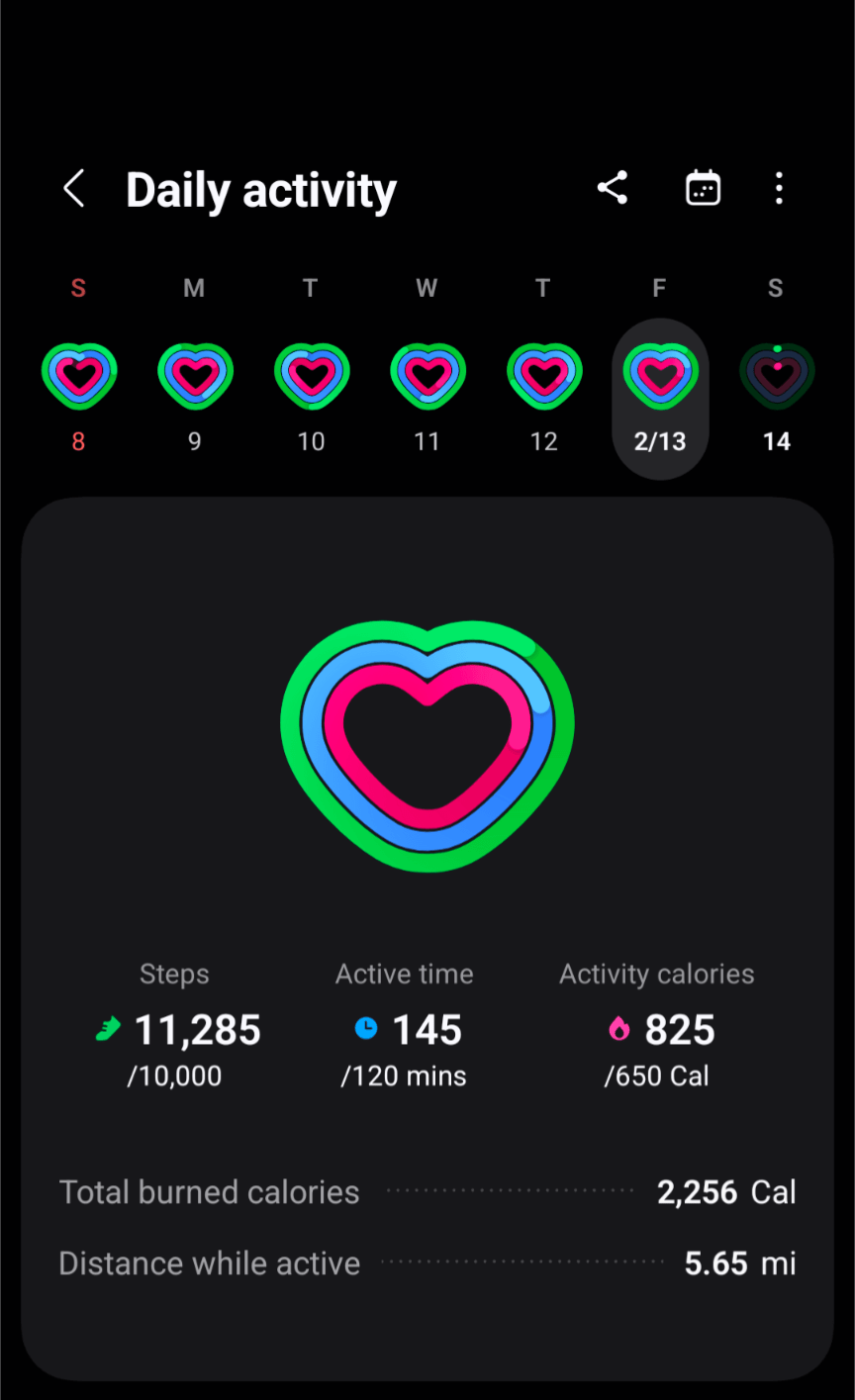
One of the biggest game-changers was my activity tracker. Seeing those numbers at the end of each day was impactful. They showed my steps, active minutes, and calorie burn. This added a level of accountability that felt real. The tracker is more than just a gadget. It’s a reflection of my daily effort. It reminds me that each day counts. Some days are intense, others are lighter, but those numbers hold me accountable to my goals.
Seeing the hearts fill up day by day and week by week became my personal scoreboard. Over time, it wasn’t just about hitting my targets—it was about finding joy in the process. Filling those hearts felt like collecting spirit points. I’d even come up with creative ways to reach my goals faster, like mixing up activities or trying something new. It turned my routine into a fun challenge. Each filled heart was a little celebration. It reminded me that fitness can be rewarding and enjoyable.
Lessons Learned on Burnout and Recovery
About six months into my journey, I decided to push myself further. I was transitioning into weight training. I took on a “push, legs, pull” routine. I thought I could hit each muscle group twice a week. My schedule was ambitious—push, legs, pull, rest, and repeat every fourth day. What I didn’t factor in was the physical demand of my job. My job involves nearly eight hours a day of walking, pushing, pulling, and lifting. This combo pushed me past my limits.
I hit a wall of exhaustion, and it forced me to take a step back. I took a deload week, lightening my approach and cutting my workout volume almost in half. To my surprise, the added recovery time actually led to better results. My muscles felt fresher. My energy levels improved. I realized that rest was just as important as the workouts themselves. That experience taught me the importance of listening to my body and finding balance. More isn’t always better; sometimes, giving your body time to recover is what brings the best progress.
Pacing and Consistency: Embracing a Sustainable Rhythm
Since then, my focus has been on a steady pace. Going all out every day might sound good in theory. However, I learned that fitness is a marathon, not a sprint. Now, my goal is to move every day—some days harder, some days lighter. It’s about staying consistent without burning out. My habit-based approach means these things—working out, strength training, nutrition, rest—are just part of my day. They’re locked in, making it tough to fall off because they’re ingrained. When it becomes a habit, it’s no longer a chore or something you have to think about. It just happens.
Joy in the Routine: Making Fitness Fun
What I didn’t expect was how much joy I’d find in this routine. When fitness starts, it can feel like a chore. But over time, it transformed into something I look forward to. Every filled heart on the tracker, every step closer to my goals, feels like a reward. I’m always brainstorming new ways to keep it fun and challenging. I might experiment with a new workout. Sometimes, I add weights or find a scenic route for my walks. Fitness became more than a goal—it became something that enriches my day, every day.
Tips for Consistency and Long-Term Success
If there’s one takeaway from my journey, it’s this: Consistency matters more than intensity. Make fitness something you do daily, even if it’s just a short walk. Set goals that are achievable, like a calorie target that’s realistic and sustainable. Find joy in the journey, and keep things interesting. And, most importantly, remember that fitness is about your rhythm, not anyone else’s. Embrace your own pace, let it carry you forward, and celebrate every step of progress.
Everyone’s rhythm is different. This isn’t about matching someone else’s tempo; it’s about finding your own. Let yourself move to your own beat. This journey is personal. Keep your focus there. Progress will come naturally. Take it one day, one step, one habit at a time.
Take care!




 IntraConversions
Leave a comment